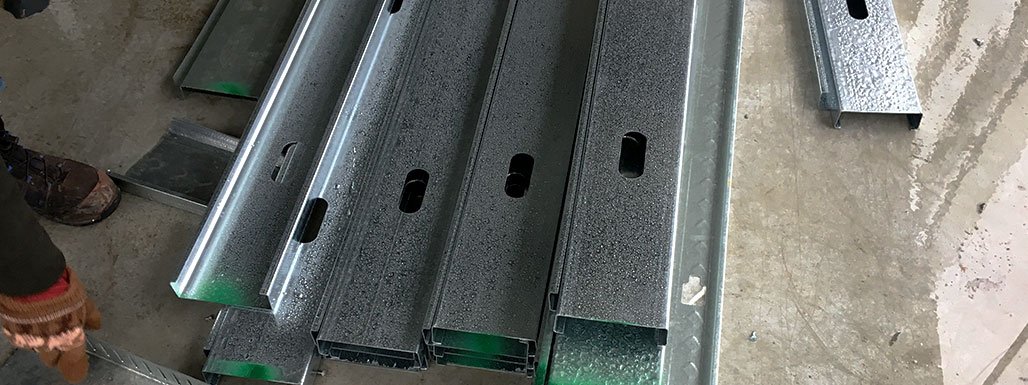
Small-scale roll forming machines are specialized pieces of equipment making a big impact in cold-formed steel and construction — but are they worth it? Keep reading as we explain exactly how they work, plus the pros and cons, so you can make an informed decision if...
Cold-formed steel structural studs and non-structural metal framing are both frequently used building materials, but they have distinct differences. In this post, we’re focusing on non-structural metal framing, including the key advantages and considerations that may...
When performing inspections of cold-formed steel framing, one of the most obvious aspects to check is the material thickness (mils or gauge). Some experienced tradespeople can tell the difference between standard thicknesses by feel alone, but thankfully there are...
Metal stud bridging, or metal stud bracing, refers to the reinforcement of metal stud wall framing to prevent buckling or twisting. Bridging reinforcing will vary depending on the project, but one of the most common options is ClarkDietrich’s Spazzer® bridging bar,...
In this blog post, we’ll explore the different types of panel construction that’s taking place in the United States, the panel design process, and the unique aspects of panel construction. What is Panel Construction? In the never-ending search for cost savings and...