Southeast Iowa Regional Airport, Runway 18-36 Reconstruction
Burlington, IA
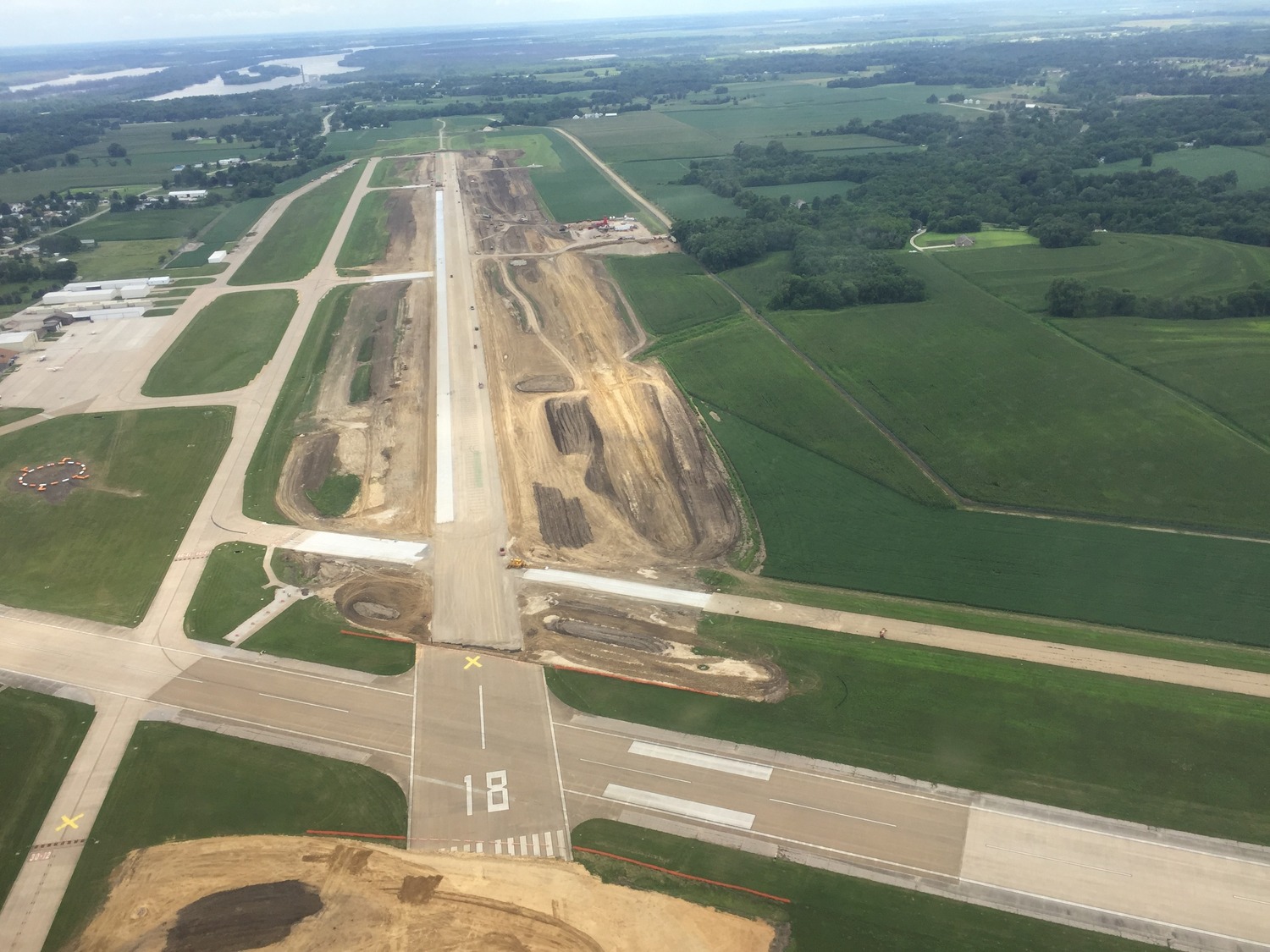
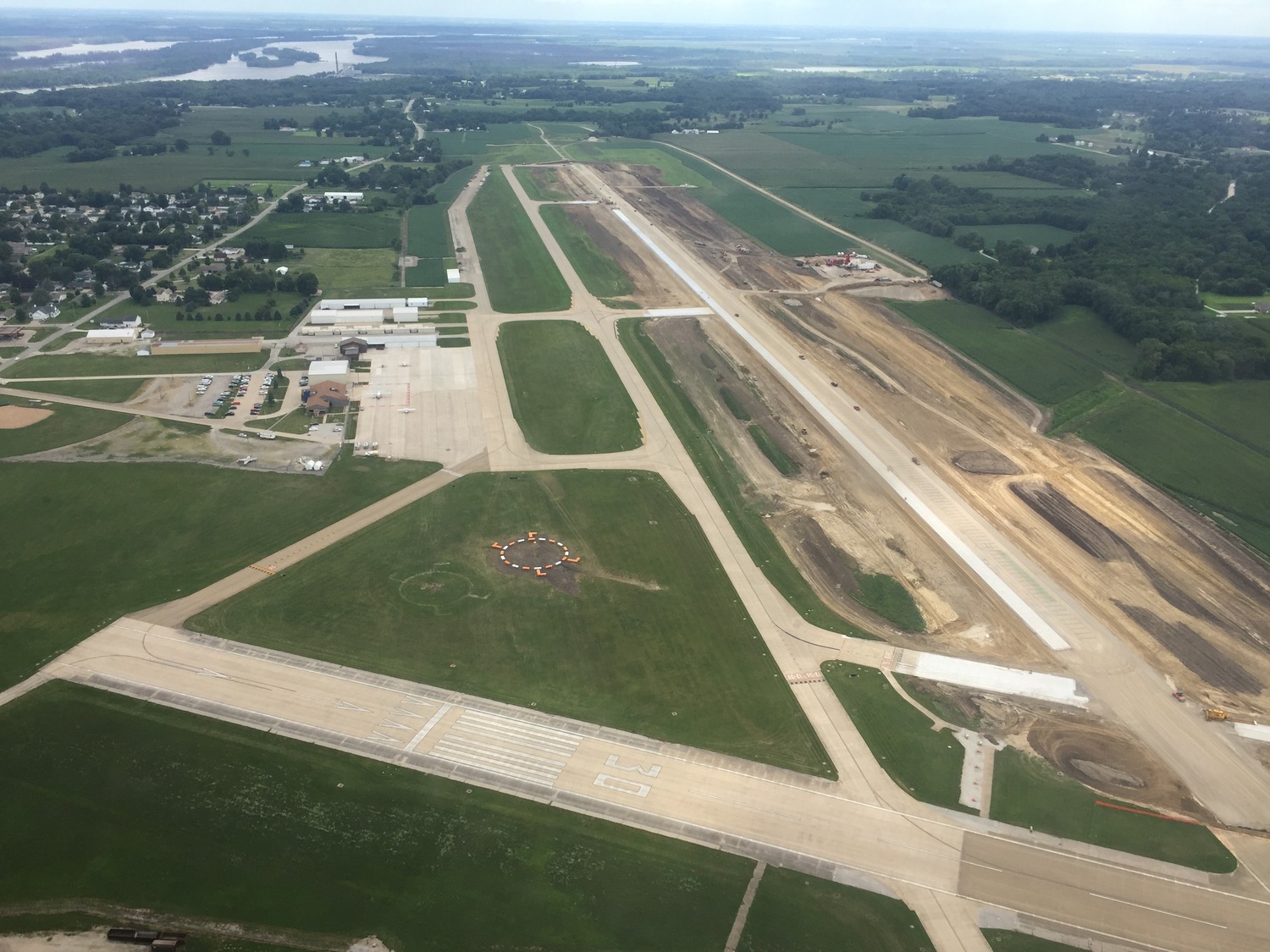
The Southeast Iowa Regional Airport tasked McClure with providing design, bidding and construction management to reconstruct the Airport’s primary runway, Runway 18-36. Runway 18-36 consisted of an asphalt pavement surface course (approximately 6 inches thick) overlaid on concrete pavement (approximately 8 to 10 inches thick). The majority of concrete pavement was constructed in 1944 and a 1,351 foot extension to the south constructed in 1968. The most recent improvement was a 3 inch asphalt overlay in 2005.
The asphalt surface was experiencing climate-related distresses such as cracking, weathering, and blowups (particularly along the edges of the runway). Following a 2014 visual pavement assessment, most of the runway was assigned a Pavement Condition Index (PCI) value of 59 out of 100 while the southernmost 1,000 feet was assessed at 56. During the preliminary design phase, a geotechnical investigation determined that runway reconstruction was necessary. The project was divided into the following ten (10) elements:
• Reconstruct Runway 18-36
• Re-grade Runway 18-36 Safety Area to Improve Drainage
• Remove Runway 18 Displaced Threshold
• Runway 18-36 HIRL LED System
• Taxiway Connector Guidance Signs
• Construct a new Taxiway A1 to the existing Runway 18 threshold
• Reconstruct Runway 12-30 (inside the Runway 18-36 Object Free Area)
• Reconstruct/Rehabilitate Taxiways
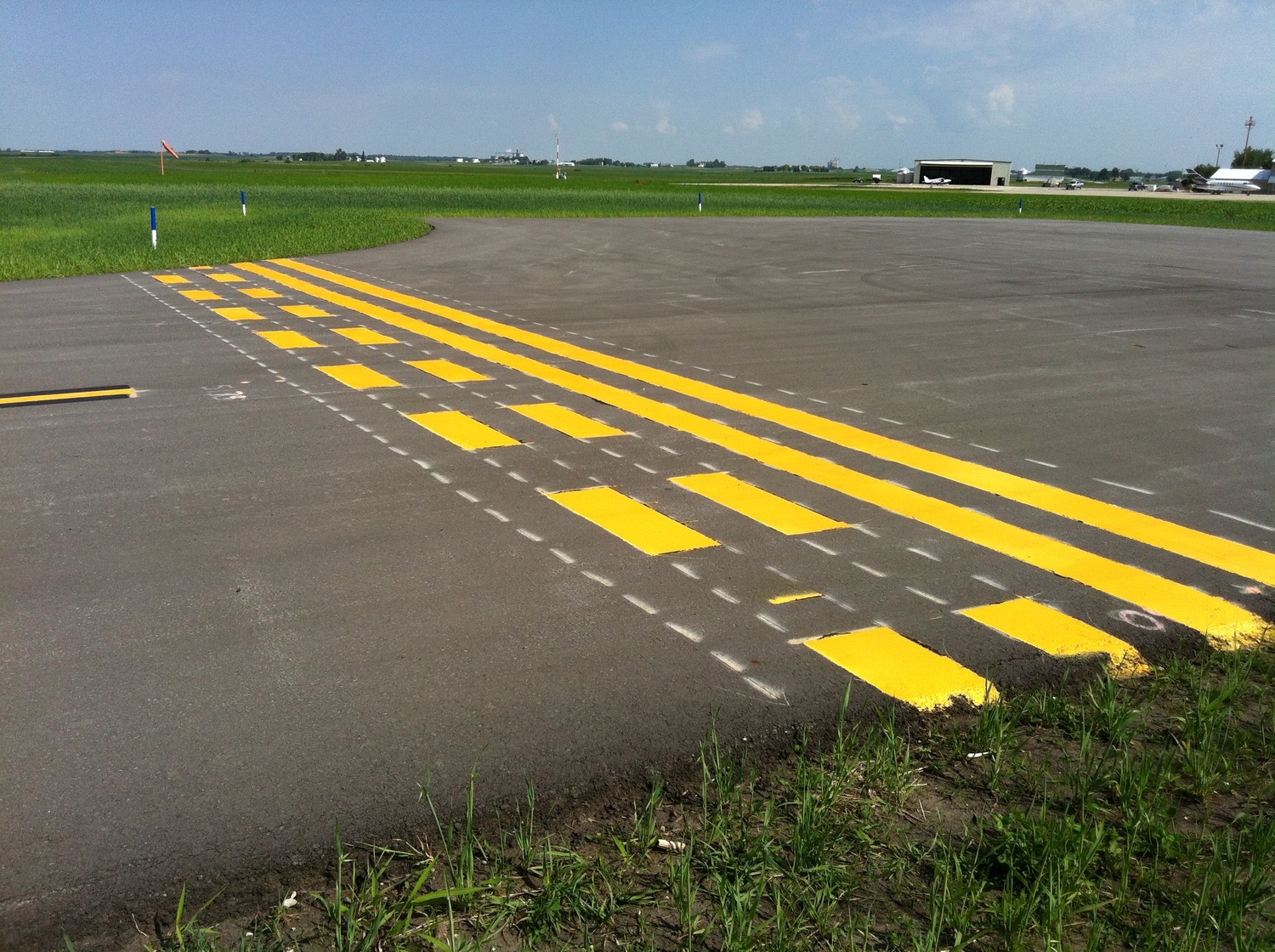
• NAVAIDs/VISUAL AIDS
• Runway 18 Temporary Displaced Threshold
The asphalt surface was experiencing climate-related distresses such as cracking, weathering, and blowups (particularly along the edges of the runway). Following a 2014 visual pavement assessment, most of the runway was assigned a Pavement Condition Index (PCI) value of 59 out of 100 while the southernmost 1,000 feet was assessed at 56. During the preliminary design phase, a geotechnical investigation determined that runway reconstruction was necessary. The project was divided into the following ten (10) elements:
• Reconstruct Runway 18-36
• Re-grade Runway 18-36 Safety Area to Improve Drainage
• Remove Runway 18 Displaced Threshold
• Runway 18-36 HIRL LED System
• Taxiway Connector Guidance Signs
• Construct a new Taxiway A1 to the existing Runway 18 threshold
• Reconstruct Runway 12-30 (inside the Runway 18-36 Object Free Area)
• Reconstruct/Rehabilitate Taxiways
• NAVAIDs/VISUAL AIDS
• Runway 18 Temporary Displaced Threshold
Highlights
- As a commercial service airport, McClure understood the importance of maintaining operations during construction on an airfield. A well-executed phasing plan began with conducting numerous coordination meetings with key stakeholders to seek input, considering multiple alternatives and providing a recommendation for minimizing the impact to the Airport. After discussions with key stakeholders such as the aircraft charter service and regional airline, McClure learned most of their operations require a minimum runway length of 4,500 feet. As a result, the McClure Team developed a phasing plan to maintain at least 4,500 feet of usable runway length throughout the Runway 18-36 project; and never requiring the airport to be entirely closed.
- Maintained uninterrupted airport operations throughout construction
- Developed and executed a detailed phasing plan to minimize operational impacts
- Conducted multiple coordination meetings with key stakeholders to gather input and evaluate alternatives
- Collaborated closely with Jet Air, Inc. and Air Choice One to understand operational requirements
- Identified the need to maintain a minimum runway length of 4,500 feet for ongoing air service.
- Designed construction phases to ensure at least 4,500 feet of Runway 18-36 remained usable at all times
- Successfully avoided a full airport closure during the runway rehabilitation project
Discipline
Aviation
Project Type
Runways, Taxiways, and Aprons
Client
Southeast Iowa Regional Airport Authority