
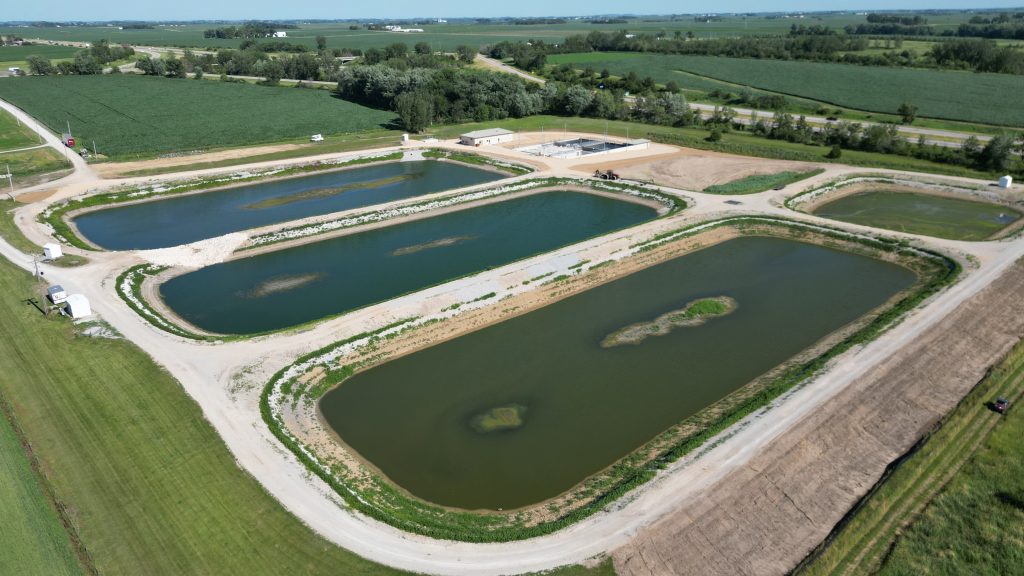
As wastewater treatment requirements become more stringent, communities with existing wastewater lagoon systems may need to evaluate whether their current treatment processes can continue to meet discharge limits. Upgrading these systems does not always mean abandoning existing infrastructure. With the right approach, portions of an existing lagoon system can continue to support a more advanced treatment process.
The City of Jesup, Iowa, provides an example of this transition. To address more stringent ammonia and E. coli requirements in the City’s discharge permit, McClure led the planning, design, and construction of a new wastewater treatment facility centered around a Sequencing Batch Reactor (SBR) treatment process.
From Wastewater Lagoons to SBR Treatment
Jesup’s existing wastewater treatment system consisted of a four-cell aerated lagoon system. While wastewater lagoons can provide an effective treatment solution, changing discharge requirements created the need for the City to evaluate more advanced treatment alternatives.
McClure evaluated multiple treatment technologies before ultimately selecting a Fluidyne ISAM SBR wastewater treatment system to replace the existing aerated lagoon treatment process.
The SBR process provides primary and secondary treatment within a controlled treatment cycle. Jesup’s system also incorporates biological nutrient removal to help meet Iowa Nutrient Reduction Strategy goals for effluent total nitrogen and total phosphorus.
The system is designed to treat the City’s Average Wet-Weather flow of 1.3 million gallons per day (MGD), providing more advanced treatment while addressing Jesup’s changing regulatory requirements.
How the Jesup SBR Wastewater Treatment System Works
The new wastewater treatment facility combines several processes to manage wastewater from the moment it arrives at the plant through final disinfection and discharge.
The project includes:
- A new Headworks Building with influent screening, control equipment, and laboratory space
- A Flow Control Structure for managing excess wastewater flows
- Flow Equalization Basins repurposed from existing aerated lagoon cells
- A two-train, four-cell Fluidyne ISAM SBR system
- Biological nutrient removal
- A Wedeco UV disinfection system before discharge to the receiving stream
Together, these components provide Jesup with a more advanced SBR wastewater treatment process while allowing portions of the former wastewater lagoon system to continue serving the City.
Repurposing the Existing Wastewater Lagoons
One of the notable elements of the Jesup project is how the existing wastewater lagoon infrastructure was incorporated into the new treatment approach.
Rather than abandoning the entire aerated lagoon system, existing lagoon cells were repurposed as Flow Equalization Basins. A new Flow Control Structure is designed to passively direct flows exceeding the City’s 1.3 MGD Average Wet-Weather flow to the EQ basins without requiring manual operator input.
This gives the facility additional flexibility for managing higher incoming flows before they move through the primary treatment process.
For communities considering upgrades to existing wastewater lagoons, evaluating opportunities to reuse existing infrastructure can be an important part of the planning process. In Jesup, the former lagoon cells continue to provide value in a new role that supports the SBR treatment system.
Managing Wet-Weather Flows with Flow Equalization
Wastewater flows are not constant, and wet-weather conditions can create additional demands on a treatment facility. Treatment systems must be designed to manage those variations while maintaining reliable treatment.
Jesup’s approach connects the new SBR system directly with the City’s repurposed wastewater lagoon infrastructure. When flows exceed Average Wet-Weather conditions, the Flow Control Structure passively diverts excess flow to the EQ basins.
This passive approach reduces the need for operators to manually redirect excess flows during higher-flow conditions while helping regulate the amount of wastewater entering the primary treatment process.
The design illustrates the importance of considering more than the treatment technology itself. SBR wastewater treatment, flow management, existing infrastructure, disinfection, and facility operations all need to function as an integrated system.
SBR Treatment and Biological Nutrient Removal
Meeting more stringent ammonia and E. coli requirements was a primary driver for Jesup’s new wastewater treatment facility, but the treatment system also supports broader nutrient reduction goals.
The Fluidyne ISAM SBR process was designed to provide biological nutrient removal to help meet Iowa Nutrient Reduction Strategy goals for effluent total nitrogen and total phosphorus.
Following treatment through the SBR system, wastewater passes through a Wedeco UV disinfection system before being discharged to the receiving stream.
Together, the SBR and UV processes provide a more advanced treatment approach than the former aerated lagoon system while addressing the City’s current treatment requirements and broader water quality objectives.
Evaluating SBR Treatment for Wastewater Lagoon Upgrades
Every community’s wastewater system is different, which is why evaluating treatment alternatives is an important part of planning a major wastewater lagoon upgrade.
Factors that may influence the selection of an SBR wastewater treatment process include:
- Existing wastewater characteristics and flows
- Current and future discharge permit requirements
- Nutrient removal goals
- Required treatment performance
- Existing infrastructure that could be reused
- Wet-weather flow management
- Operational requirements
- Long-term community needs
For Jesup, evaluating multiple technologies helped identify an approach suited to the City’s treatment requirements while preserving a useful role for portions of the existing wastewater lagoon system.
Making More of Existing Wastewater Infrastructure
Jesup’s transition demonstrates that upgrading a wastewater lagoon system does not necessarily require starting completely from scratch.
The City moved from a four-cell aerated lagoon treatment process to a more advanced SBR system, but portions of the existing lagoon infrastructure continue to provide value as Flow Equalization Basins. Repurposing those cells connects Jesup’s previous treatment infrastructure with its new wastewater treatment process.
The result is a system that combines new technology with strategic reuse of existing infrastructure.
A New Approach to Wastewater Treatment in Jesup
The City of Jesup’s wastewater treatment improvements represent a significant transition from an aerated wastewater lagoon system to SBR wastewater treatment.
By evaluating multiple treatment technologies, selecting a Fluidyne ISAM SBR system, incorporating biological nutrient removal and UV disinfection, passively managing excess flows, and repurposing existing lagoon cells for flow equalization, the project addresses the City’s treatment requirements while making strategic use of its existing infrastructure.
Jesup’s project provides a strong example for communities evaluating the future of their own wastewater lagoon systems. Rather than viewing existing lagoons and new treatment technologies separately, the project demonstrates how the two can work together to create a wastewater treatment system designed around regulatory requirements, operational needs, water quality goals, and long-term performance.

Trey Kahl-Long, PE
Learn More
Learn more about McClure’s water and wastewater services or contact us at info@mcclurevision.com.