
Visualization is a big part of what landscape architects do best. The ability to be able to look at a set of construction drawings and envision what that reality will look like on the ground is a learned skill, and one that comes with being on the inside of our industry of builders and planners. An area where we as landscape architects excel is being able to present these technical drawings with clarity and context—adding color, dimension, and life to create a vision rooted in place.
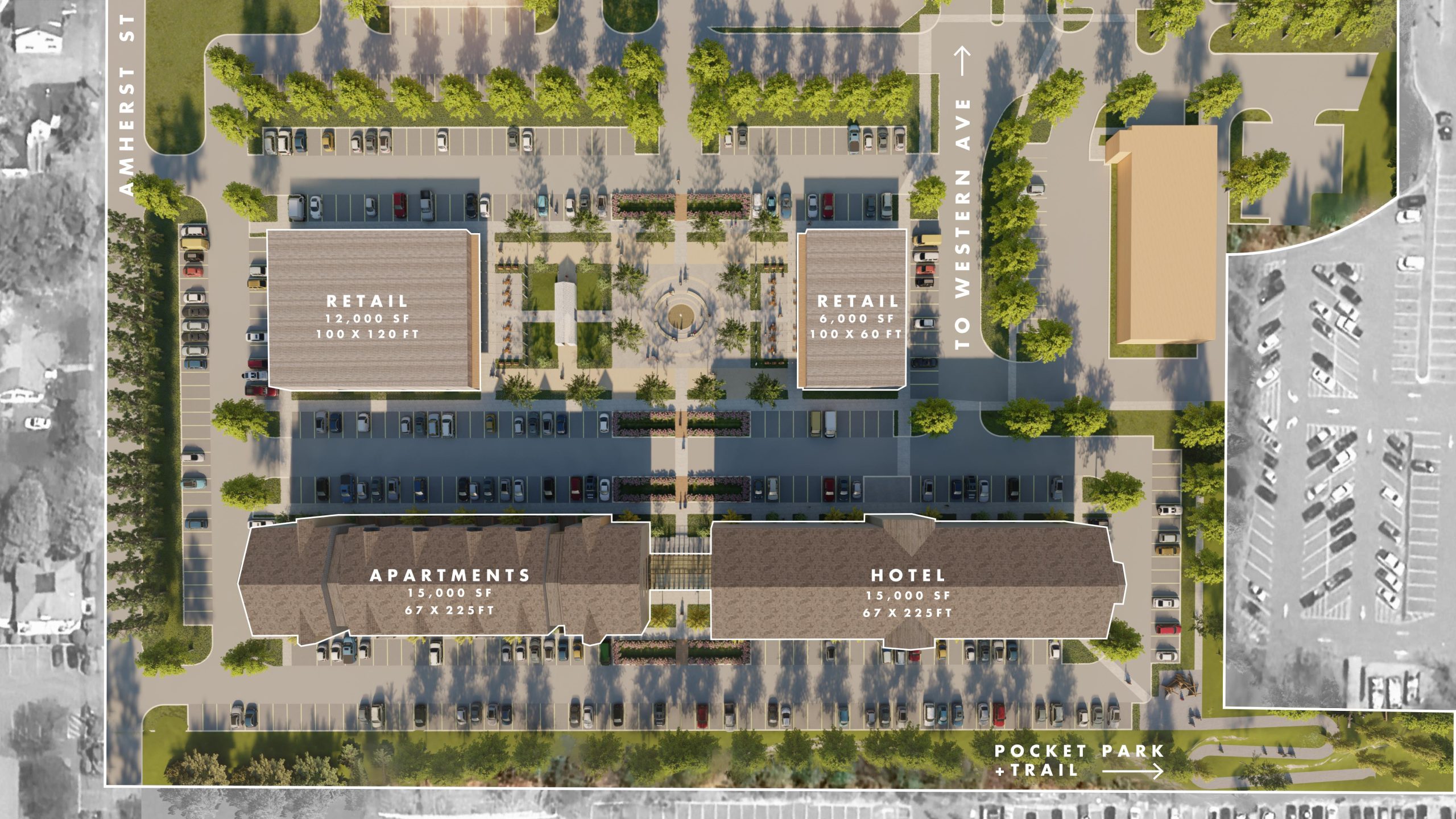 Perspective Drawings
For me, perspective drawings are the most accessible form of design communication Plan drawings and even sections can be challenging for those outside the profession to interpret, as they’re often unfamiliar with the nuances of technical drawings. Dynamic, 3-dimensional renderings bridge that gap, offering clarity and legibility while evoking a sense of aliveness and scale that is not as easily extracted from technical drawings.
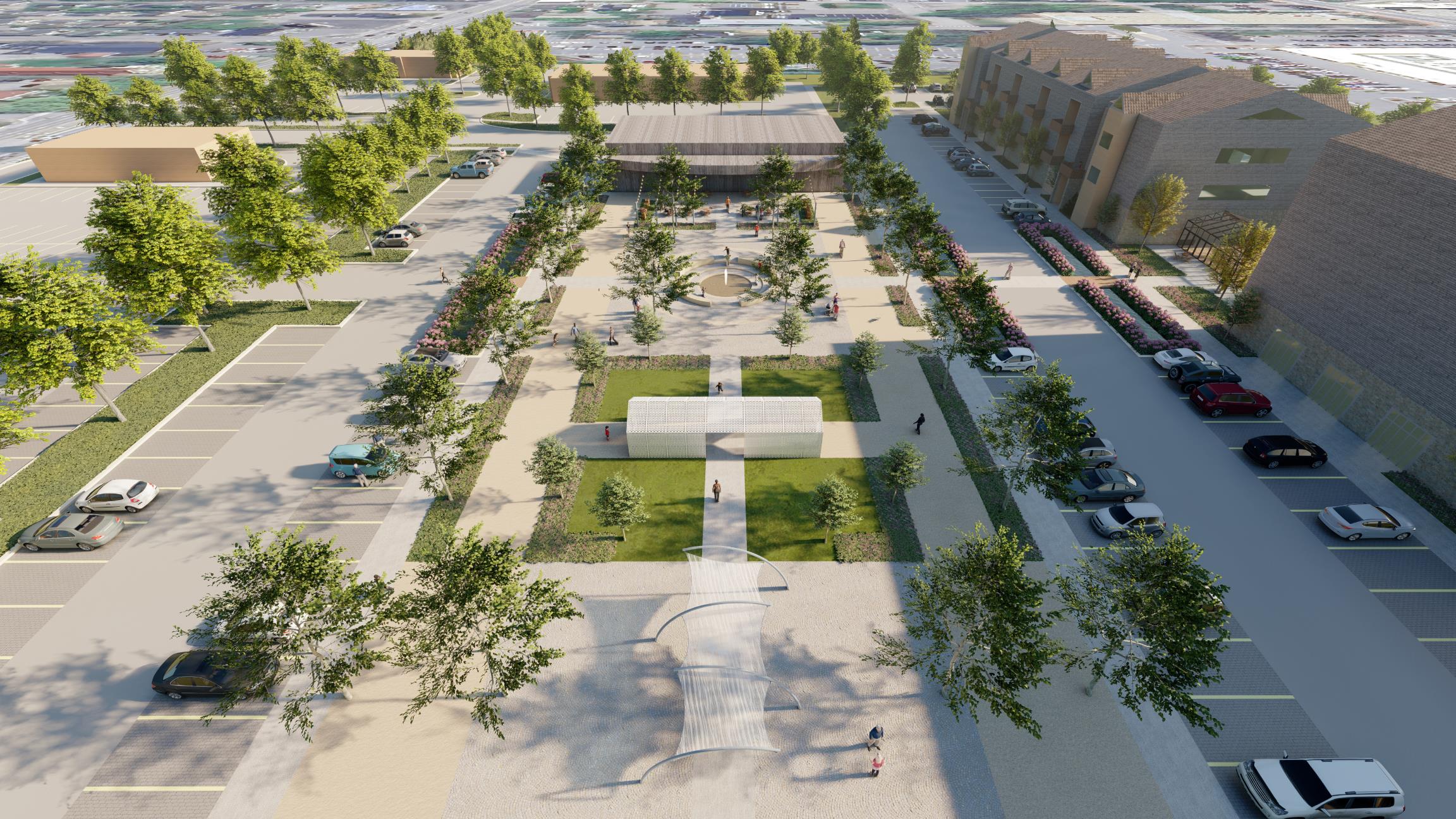 These drawings go beyond abstraction; they help people envision themselves in planned spaces. Seeing human-scale figures engaging with a site provides a frame of reference for potential users to be able to visualize themselves in those spaces. Seeing proposed tree canopy anchors a site environmentally. Seeing the areas that will be shaded as a result of the shadows cast from surrounding architecture can help inform the design of communal spaces and amenities.
Unlike the quantitative, or measured, approach that technical drawings require, perspective drawings take a more qualitative, or narrative, approach. These are focused on the feeling a space evokes, the potential social activation that could be born out of a design, and the opportunities that can be found within certain spaces. These to-scale models that are built digitally to capture these spaces are not just about envisioning the potential life of a site; they can illuminate design opportunities, reveal oversights, and serve as tools for calculating site metrics. 3-dimensional models easily showcase sun versus shadow based on building placement and can inform modifications to site layout.
Plug-ins are available to model and calculate how stormwater moves across a site during rain events, using the site’s topography to guide the design of stormwater management practices. As designs progress, these models can evolve, capturing each stage of a project’s development and serving as a record of its transformation.
In addition to static, stand-alone images, these models allow a range of opportunities for presentation including video walk-throughs of a site and are powerful for public and stakeholder engagement. At McClure, we’ve seen firsthand how powerful these visual tools can be in creating excitement, fostering buy-in, and catalyzing future business development.
Case Study: Corridor Plaza
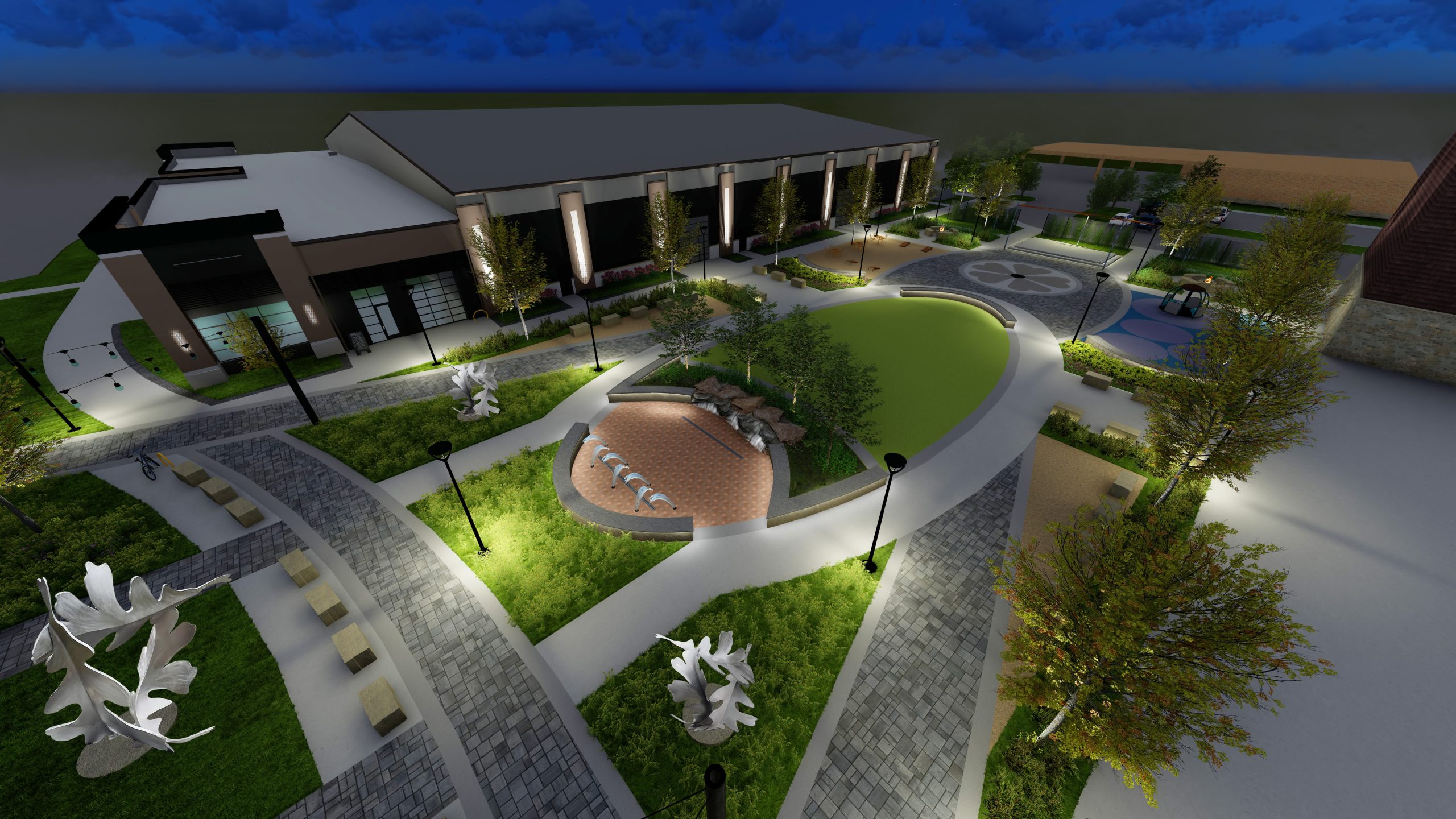
Our landscape team has had the pleasure of evolving the design for Corridor Plaza in Fort Dodge, Iowa. We employed a 3-dimensional model to showcase the details of the design to City staff. This included images rendered to depict the site at different times of day—even after sunset—to emphasize the space’s potential as a vibrant, inviting hub for dynamic programming.
The exhibit we shared to close our presentation was a walk-through video showing the experience approaching the site, circulating around the plaza, and finally zooming out to look back down at the plan of the site from a bird’s eye perspective. We were not only able to generate excitement through these renderings with City staff during that meeting, but these went on to be employed to engage potential stakeholders that may contribute as investors in the implementation of this project’s construction.
The impact of these visualizations extended even further. Our work in Fort Dodge inspired the City of Waterloo, Iowa, to pursue their own mall redevelopment project. Now, we are collaborating with them to bring their vision to life—further proof of how visualization serves as a catalyst for both project fundraising and future business opportunities.
Conclusion
Our hope for every visualization endeavor is to engage communities, inspire stakeholders, and pave the way for future collaborations. To us, an opportunity to create a vision of what the future of a site might hold is the opportunity to do what McClure does best—making lives better.

Danielle Yatsook
Danielle is a graduate of the Fay Jones School of Architecture + Design beginning her career at McClure as a landscape designer. Her experiences working as a research assistant within her university allowed her to be a part of projects that ranged from collaborating with local municipalities to coordinating projects virtually with other universities. Focused on using design as an educational tool, since working at McClure she has been involved in projects that utilize green infrastructure to mitigate stormwater issues and enhance public space. The creation of places that reflect the community and ecology around them are what drives her work and approach. You can contact Danielle at dyatsook@mcclurevision.com.
Learn More
Learn more about McClure’s landscape architecture services or contact us at info@mcclurevision.com.